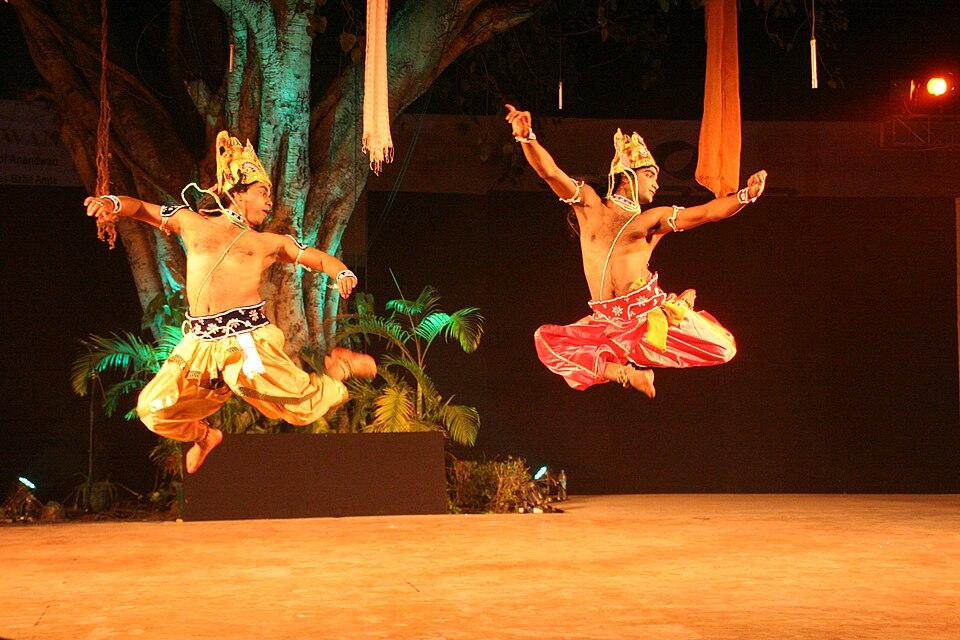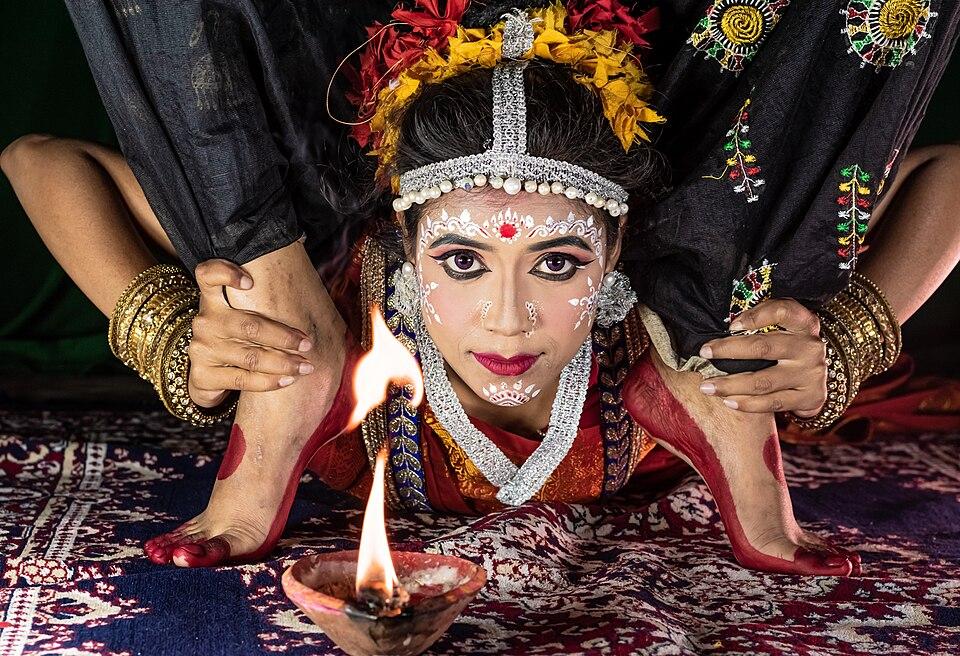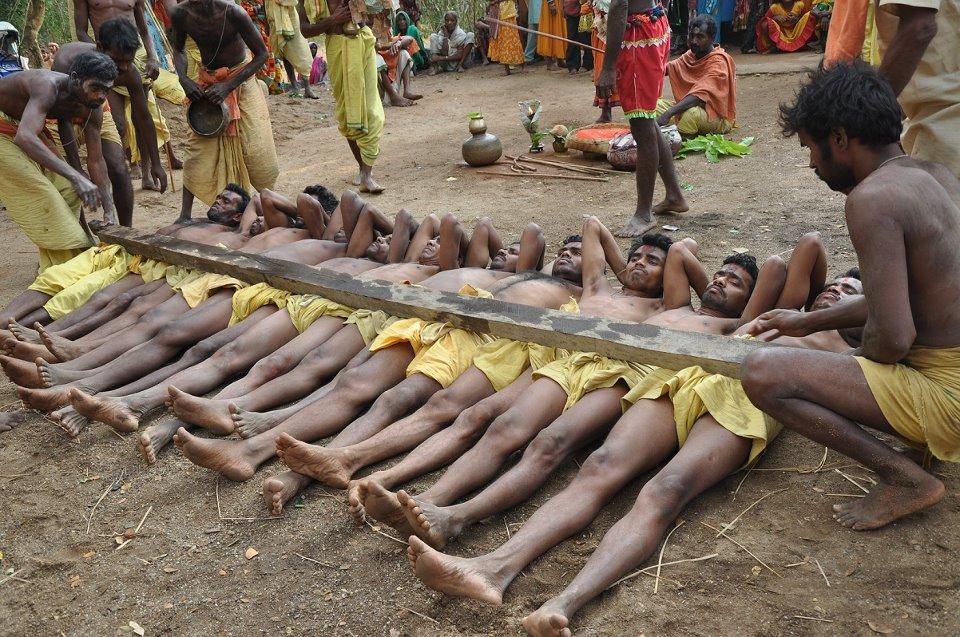
Danda Nacha (ଦଣ୍ଡ ନାଚ) is one of Odisha's most spectacular folk dance festivals — a ritual of 13, 18 or 21 days of intense devotion, fire and water rites, and acrobatic performances dedicated mainly to Lord Shiva, with Goddess Kali and other deities also worshipped. Practiced mainly in the Ganjam district, it is a raw, powerful expression of faith.
Quick Facts
| Aspect | Details |
|---|---|
| Duration | 13, 18 or 21 days (Chaitra month, March–April) |
| Region | Ganjam, Kandhamal, Dhenkanal, Angul and nearby areas |
| Deity | Lord Shiva (Maheswar) & Goddess Kali |
| Participants | Male devotees (called Danduas/Bhoktas) |
| Climax | Chaitra Sankranti (Meru or Pana Sankranti) |
Origins & History
Danda Nacha has roots going back centuries:
- Believed to originate from Shaivite tantra traditions
- Connected to the worship of Lord Shiva in his fierce form
- Represents the triumph of good over evil
- Devotees from many communities take part as an act of devotion
"Danda Nacha is not just performance — it is penance, sacrifice, and surrender."
The Festival Journey
The exact sequence varies by village and troupe. The outline below is indicative only.
Days 1–3: Preparation (Adhivasa)
- Devotees (Bhoktas) take a vow of celibacy and fasting
- Live in a temporary ashram, away from home
- Eat only once a day — simple vegetarian food
- Begin purification rituals
Days 4–10: Daily Performances
- Morning — Temple worship and procession
- Evening — Dance performances in villages
- Night — Storytelling through dance-drama
- Performances depict mythological stories of Shiva, Kali, and Parvati
Days 11–12: Intensification
- Fasting becomes stricter
- Performances more elaborate
- Acrobatic feats increase in difficulty
Final Day: The Grand Finale (Meru Jatra)
The climax, around Chaitra Sankranti, features breathtaking acts of devotion:
- Fire rites — Ordeals involving fire
- Water rites — Rituals performed in ponds or water
- Acrobatics — Human pyramids and difficult stunts
Performance Elements
Dance Forms
- Parava — Opening dance
- Hara-Parvati — Episodes of Shiva and Parvati
- Fakir-Fakiriani — Comic character pair
- Savara-Savarani — Hunter couple
- Leelas — Story-based dance-dramas
Musical Instruments
Traditionally, musicians of the Ghasi community provide the music:
- Dhol — Large barrel drum (primary)
- Mahuri — Traditional Odia oboe
- Other percussion such as cymbals, depending on the troupe
Costume & Makeup
- Body paint — Elaborate designs with natural colors
- Costumes — Representing various deities and characters
- Headgear — Crown-like structures made of flowers
- Accessories — Bells, chains, and sacred threads
The Bhoktas (Devotees)
The performers undergo extraordinary discipline:
| Rule | Details |
|---|---|
| Celibacy | Complete abstinence for the whole festival |
| Fasting | Simple vegetarian food; no meat or fish |
| Sleep | On the bare ground |
| Dress | Simple white dhoti |
| Prayer | Multiple times daily |
They believe Lord Shiva grants them supernatural tolerance to pain during the festival.
Mythological Stories Depicted
- Shiva-Parvati marriage — The cosmic union
- Daksha Yagna — Sati's sacrifice
- Kali's fury — Destruction of demons
- Rama-Ravana battle — Scenes from Ramayana
- Krishna Leela — Divine play of Lord Krishna
Regional Variations
Danda Nacha is strongest in Ganjam district, where many villages around Berhampur keep their own troupes. It is also performed in Kandhamal, Dhenkanal and Angul, with local differences in songs, characters and rites.
Cultural Significance
Danda Nacha represents:
- Faith — Extreme devotion to the divine
- Community — Villages come together
- Tradition — Centuries-old practices kept alive
- Social equality — All castes participate as equals before god
- Healing — Many believe in the therapeutic power of penance
Challenges & Preservation
Concerns
- Some rituals raise safety issues (fire walking, piercing)
- Younger generation shows less interest
- Urbanization reducing village performances
- Need for documentation and preservation
Government Efforts
- Cultural festivals inviting Danda Nacha troupes
- Documentation by cultural bodies and researchers
- Support for performers and communities
When & Where to Watch
- When: Chaitra month (usually March–April), ending around Chaitra Sankranti
- Where: Villages across Ganjam district, especially near Berhampur
- Duration: Evening performances last 4–6 hours
Related: Odissi Dance • Rath Yatra • Odia Culture