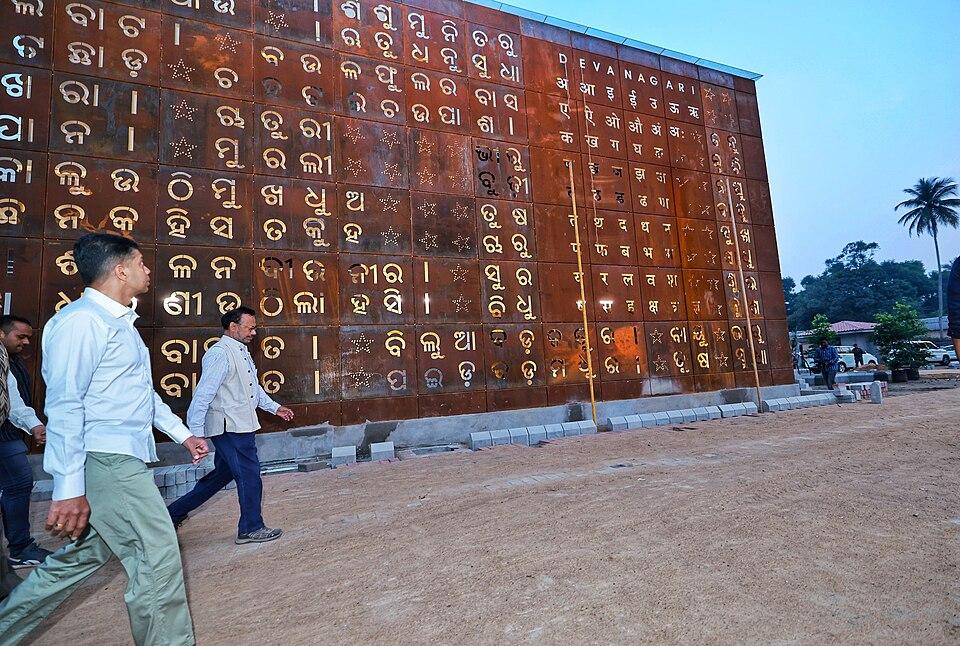
The Odia script (ଓଡ଼ିଆ ଲିପି) is one of the oldest writing systems in India, with roots going back more than 2,000 years to the Brahmi inscriptions of the 3rd century BCE. Its distinctive rounded characters — evolved to protect palm-leaf manuscripts from tearing — make it one of the most beautiful scripts in the Indian subcontinent.
Quick Facts
| Aspect | Details |
|---|---|
| Script Family | Brahmic (via eastern Siddham) |
| Age | Brahmi roots from the 3rd century BCE; distinct Odia forms over 1,000+ years |
| Characters | 14 traditional vowels and about 35–38 consonants (conventions differ), plus diacritics |
| Direction | Left to right |
| Classical Status | Granted 20 February 2014 (6th Indian language) |
| Unicode | U+0B00 to U+0B7F |
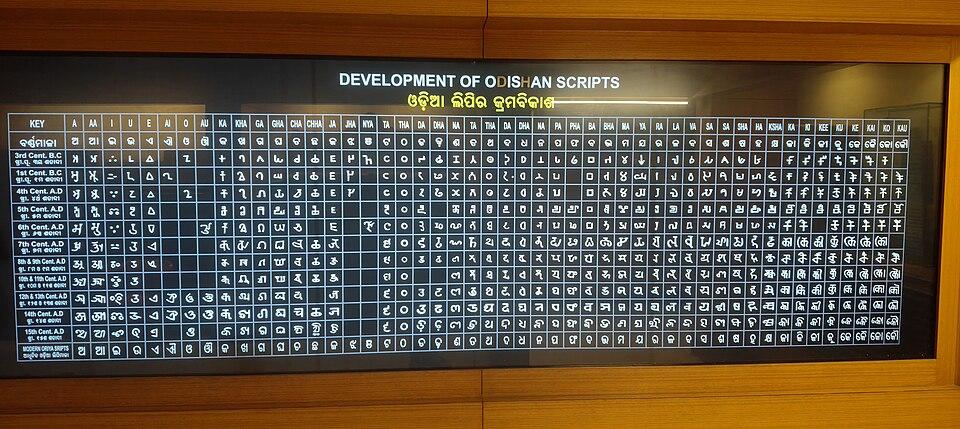
Evolution Timeline
Stage 1: Brahmi Script (3rd century BCE)
The ancestor of the Brahmic scripts of India:
- Emperor Ashoka's edicts at Dhauli (near Bhubaneswar) — earliest Brahmi inscriptions in Odisha
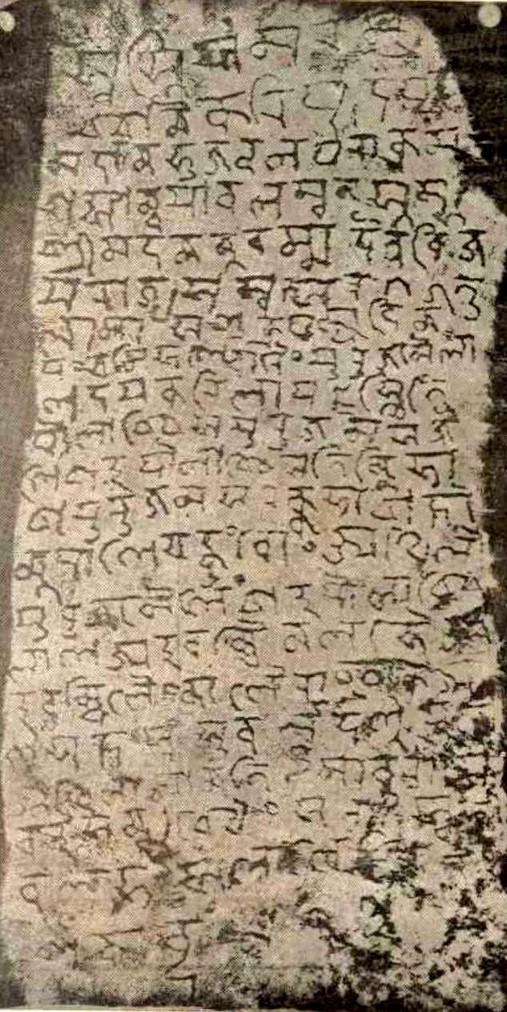
- Hathigumpha inscription of King Kharavela (2nd century BCE) — Brahmi script
- Written on stone and rock surfaces
Stage 2: Regional Brahmi and Siddham (1st–6th century CE)
Regional variations began to emerge:
- Local forms of late Brahmi and, later, the eastern Siddham script
- Seen in inscriptions and copper plate grants
- Used in copper plate grants to Brahmins
Stage 3: Proto-Odia Script (c. 7th–10th century CE)
The transition period:
- Characters begin developing unique Odia characteristics
- Seen in Sailodbhava and Bhauma-Kara dynasty inscriptions
- Used in temple walls and copper plates
- More cursive than earlier Brahmi
Stage 4: Early Odia Script (11th–15th century CE)
The script becomes distinctly Odia:
- Palm-leaf manuscripts become the primary writing medium
- Characters become more rounded — a direct adaptation
- The Eastern Ganga and Suryavamsi Gajapati dynasties patronize literature
- The Urajam inscription (1051 CE) is usually cited as the earliest inscription in Old Odia
- Sarala Das writes the Odia Mahabharata (15th century)
Stage 5: Modern Odia Script (c. 16th century–present)
Standardization and printing:
- Printing presses arrive with missionaries (19th century)
- Odia printing type was produced by Christian missionaries by 1836; Amos Sutton's Odia Bible followed in 1840
- Standardized forms for metal type
- Digital character encoding in Unicode
Why Are Odia Letters Round?
The most distinctive feature of the Odia script — its rounded, curvy characters — has a practical origin:
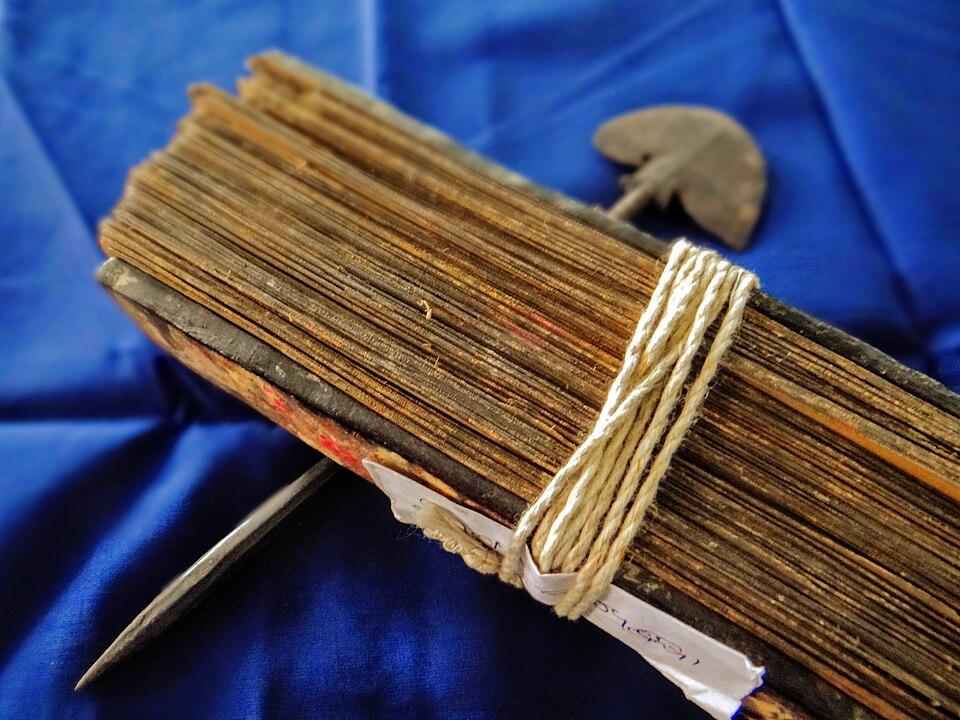
Palm-leaf manuscripts: Odisha's writing tradition used dried palm leaves (tala patra). Straight lines and sharp angles would tear the leaf fibers. So scribes evolved curved, rounded strokes that glided smoothly across the leaf surface.
A similar explanation is often given for other rounded scripts of palm-leaf cultures in South and Southeast Asia, such as Sinhala and Burmese.
The Palm-Leaf Manuscript Tradition
Talapatra Pothi (ତାଳପତ୍ର ପୋଥି) — the palm-leaf manuscript tradition:
| Aspect | Details |
|---|---|
| Material | Dried palm leaves (Palmyra palm) |
| Tool | Iron stylus (lekhani) |
| Ink | Black soot mixed with oil, rubbed into grooves |
| Binding | Holes punched, threaded with cord |
| Preservation | Can last for centuries if stored well and periodically treated |
| Storage | Wooden covers with cloth wrapping |
Process
- Harvest palm leaves and dry for months
- Press and trim to uniform size
- Incise characters with pointed iron stylus
- Apply lamp-black ink — rub into grooves
- Wipe clean — ink remains only in the incisions
- Bind multiple leaves together with thread
What Was Written
- Religious texts — Bhagavata, Ramayana, Mahabharata
- Medical texts — Ayurvedic prescriptions
- Astrological charts — Horoscopes (still used today!)
- Legal records — Land grants, royal edicts
- Literature — Poetry, drama, stories
Classical Language Status (2014)
On 20 February 2014, Odia became the 6th Indian language to receive classical language status. In October 2024 the Government of India added five more, bringing the total to eleven:
| Classical Languages | Year Granted |
|---|---|
| Tamil | 2004 |
| Sanskrit | 2005 |
| Telugu | 2008 |
| Kannada | 2008 |
| Malayalam | 2013 |
| Odia | 2014 |
| Assamese, Bengali, Marathi, Pali, Prakrit | 2024 |
Criteria Met
- High antiquity of early texts and recorded history (the criteria in force in 2014 required 1,500–2,000 years)
- A body of ancient literature and texts considered a valuable heritage
- An original literary tradition, not borrowed from another speech community
- Classical language and literature distinct from its modern form
The Odia Alphabet
Vowels (ସ୍ୱରବର୍ଣ୍ଣ) — 14 traditional
| Odia | Transliteration |
|---|---|
| ଅ | a |
| ଆ | ā |
| ଇ | i |
| ଈ | ī |
| ଉ | u |
| ଊ | ū |
| ଋ | ṛ |
| ୠ | ṝ |
| ଌ | ḷ |
| ୡ | ḹ |
| ଏ | e |
| ଐ | ai |
| ଓ | o |
| ଔ | au |
Consonants (ବ୍ୟଞ୍ଜନବର୍ଣ୍ଣ) — about 35–38
Organized in the traditional varga (group) system based on place of articulation — just like Sanskrit.
Key Inscriptions in Odisha
| Inscription | Location | Century | Script |
|---|---|---|---|
| Dhauli Rock Edicts | Dhauli, near Bhubaneswar | 3rd BCE | Brahmi |
| Hathigumpha | Udayagiri caves | 2nd BCE | Brahmi |
| Jaugada edicts | Jaugada, Ganjam | 3rd BCE | Brahmi |
| Bhauma-Kara grants | Various | 8th–10th CE | Proto-Odia |
| Urajam inscription | Urajam (Eastern Ganga) | 1051 CE | Old Odia language |
Preservation Efforts
Odisha State Museum
- Houses thousands of palm-leaf manuscripts
- Digitization projects underway
- Conservation laboratories for fragile manuscripts
Odisha State Archives
- Historical documents, copper plate grants
- Church missionary records (early printing)
- Government documents in Odia from British era
Digital Initiatives
- Unicode standardization — Complete Odia block
- Google Fonts — Odia web fonts freely available
- Government digitization — Manuscripts being scanned and catalogued
Related: Odia Alphabet • Common Odia Greetings • Odia Literature