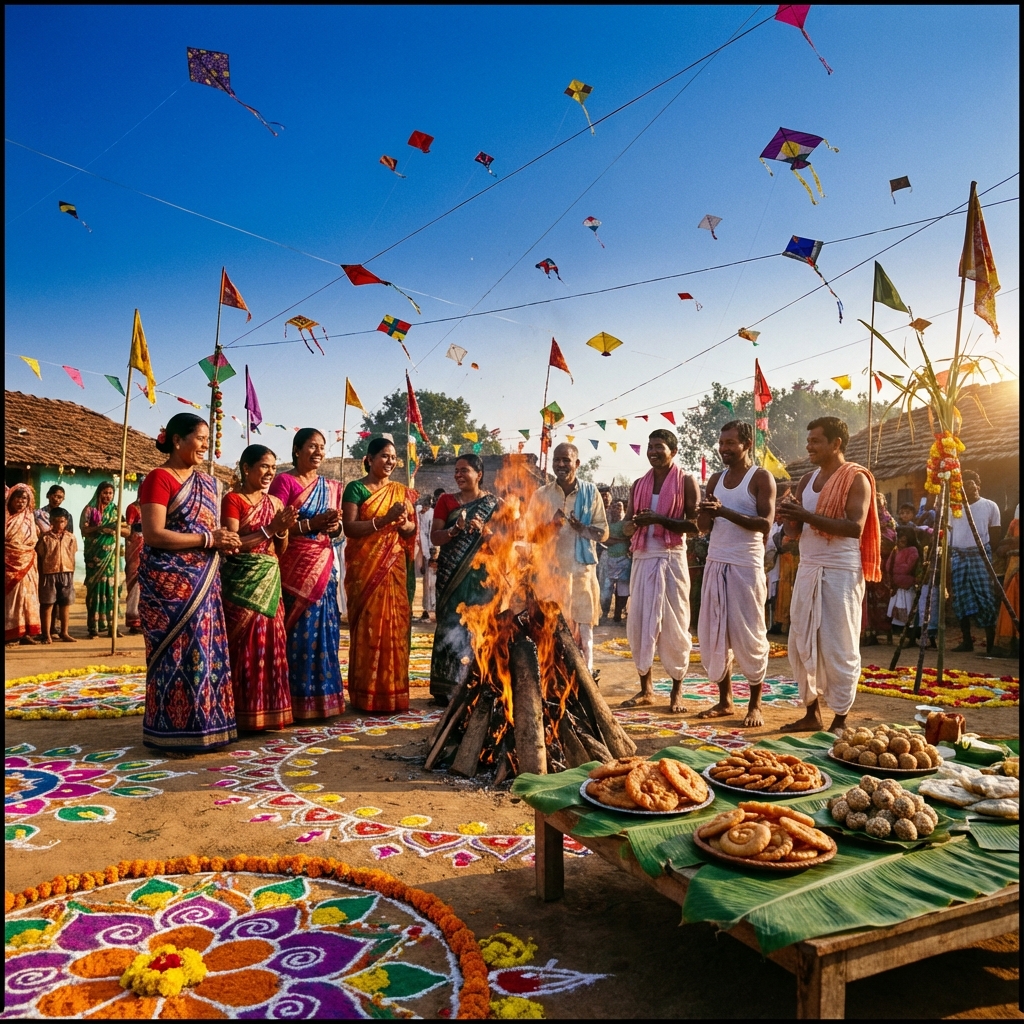
Makar Sankranti is one of the most important festivals of Odisha, celebrated every year in the month of Pausha (January 14-15). It marks the Sun's entry into the zodiac sign of Capricorn (Makar Rashi) and is traditionally regarded as the start of Uttarayan, the Sun's northward course.
When is Makar Sankranti Celebrated?
Makar Sankranti is a solar festival that falls on January 14 or 15 every year according to the Gregorian calendar. Unlike other Hindu festivals that follow the lunar calendar, this festival's date remains nearly fixed.
| Year | Makar Sankranti Date |
|---|---|
| 2026 | January 14 |
| 2027 | January 14 or 15 (check the Odia panjika) |
| 2028 | January 15 (check the Odia panjika) |
Almanacs can differ by a day depending on the exact time of the Sun's transit.
Significance of Makar Sankranti
The festival holds deep meaning across multiple dimensions:
Astronomical Significance
- Beginning of Uttarayan — Traditionally treated as the start of the Sun's northward journey
- Longer Days — Days are lengthening; astronomically this began at the winter solstice around 21 December, and the two dates have drifted apart over centuries because of precession
- End of Harsh Winter — The intense cold starts receding
Religious Significance
- Auspicious Period — Ideal time for donations, holy baths, and worship
- Bhishma's Departure — In the Mahabharata, Bhishma chose this day to leave his body
- Devas' Day — Uttarayan is considered the day of the gods
Agricultural Significance
- Harvest Festival — New paddy has been harvested
- New Rice Celebration — Celebrated as a thanksgiving for crops
- Farmers' Blessings — Prayers for a bountiful harvest
"Makar Sankranti symbolizes new hope, new goals, and new beginnings."
How Makar Sankranti is Celebrated in Odisha
In Odisha, Makar Sankranti is celebrated with great enthusiasm. It is locally known as "Makara" or "Makara Mela".
Key Rituals
Morning Holy Bath
- River Bath — Taking a dip in Mahanadi, Brahmani, and other rivers
- Lake Bath — Bathing at sacred spots in Chilika
- Sesame Oil Massage — Applying sesame oil before bathing
Worship and Prayers
- Sun Worship — Offering Arghya (water) to the Sun God
- Home Puja — Worshipping Lakshmi and other deities
- Tulsi Worship — Lighting lamps at the Tulsi plant
Donations (Daan)
- Sesame Donation — Giving sesame-based items
- Jaggery Donation — Giving sweet items
- Cloth Donation — Giving new clothes
- Cow Donation — Donating cows (considered highly auspicious)
Traditional Pithas and Sweets
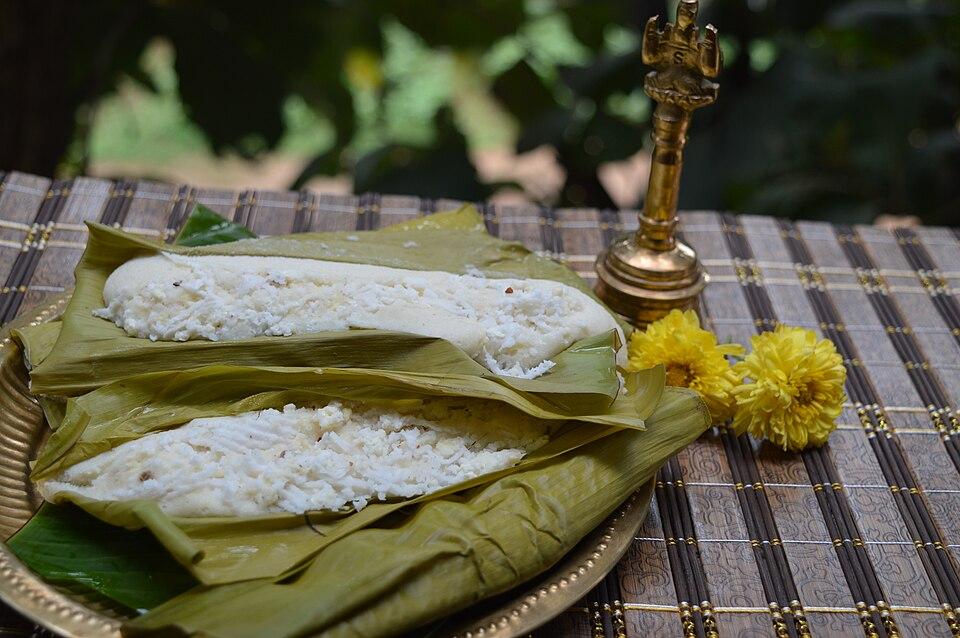
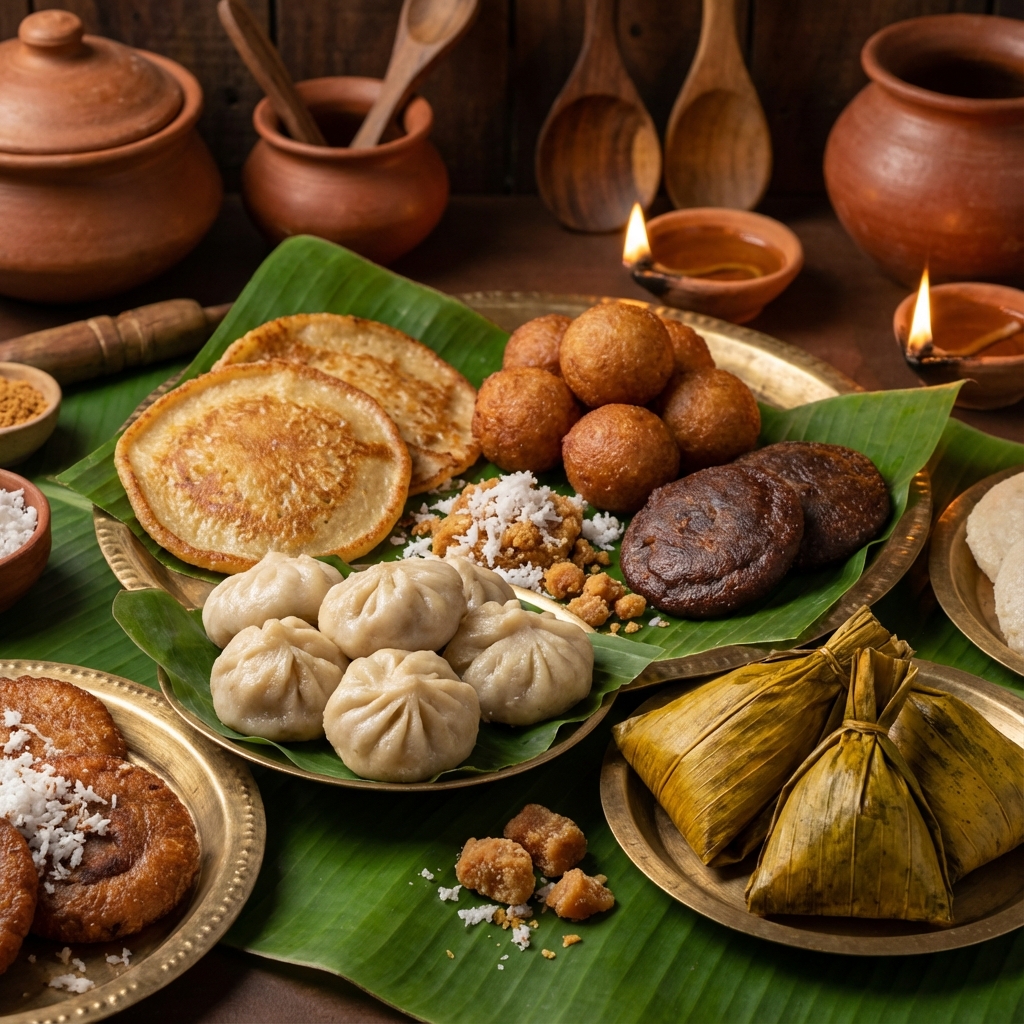
In Odisha, Makar Sankranti is closely associated with pithas. Various types of traditional rice cakes (Pithas) are prepared in every household during this time.
Popular Pithas
| Pitha Name | Description | Main Ingredients |
|---|---|---|
| Chakuli Pitha | Thin, round rice pancake | Rice and black gram batter |
| Manda Pitha | Steamed dumpling | Rice flour, coconut, jaggery |
| Kakara Pitha | Fried cake with a sweet filling | Flour, coconut, jaggery |
| Enduri Pitha | Steamed in turmeric leaves | Rice, black gram, coconut |
| Arisa Pitha | Sweet, dark brown cake | Rice flour, jaggery, ghee |
| Poda Pitha | Roasted coconut filling | Rice flour, coconut, jaggery |
| Chitau Pitha | Soft, white pancake | Parboiled rice |
Other Delicacies
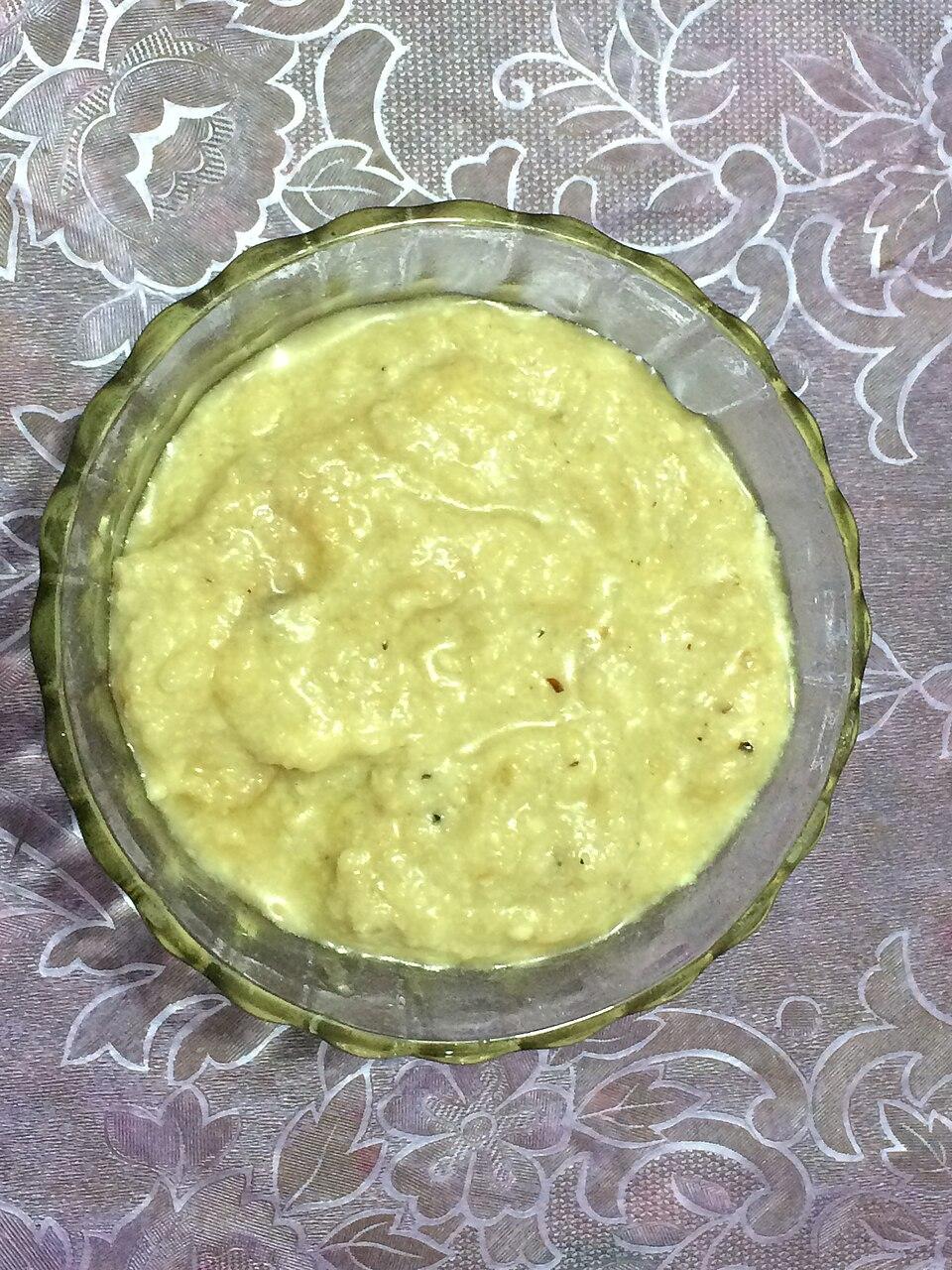
- Makara Chaula — Uncooked newly harvested rice mixed with banana, coconut, jaggery, sesame, milk and other ingredients
- Til Laddu — Sesame and jaggery balls
- Muga Laddu — Moong dal sweets
- Khiri — Rice pudding with milk
- Chhena Jhili — Cottage cheese sweets
Famous Makar Melas in Odisha
Several grand fairs are held across Odisha during Makar Sankranti.
Chandrabhaga Mela, Konark (on Magha Saptami)
Konark's best-known solar festival is held a few weeks after Makar Sankranti, on Magha Saptami (January–February).
- Location: Chandrabhaga beach, Konark, Puri District
- Highlights: Holy dip at sunrise, visiting the Sun Temple
- Legend: According to tradition, Samba, son of Krishna, was cured of leprosy here by worshipping the Sun
- Visitors: Thousands of pilgrims
Devotees take a holy dip at sunrise and then visit the Sun Temple.
Jagannath Temple, Puri
- Special Worship — Special rituals, with Makara Chaula offered to Lord Jagannath
Other Famous Melas
- Makara Mela — Dhabaleswar, Cuttack
- Makara Mela — Hatakeshwar temple, Atri, Khordha
- Makara Mela — Makara Muni temple, Balasore
Kite Flying Tradition
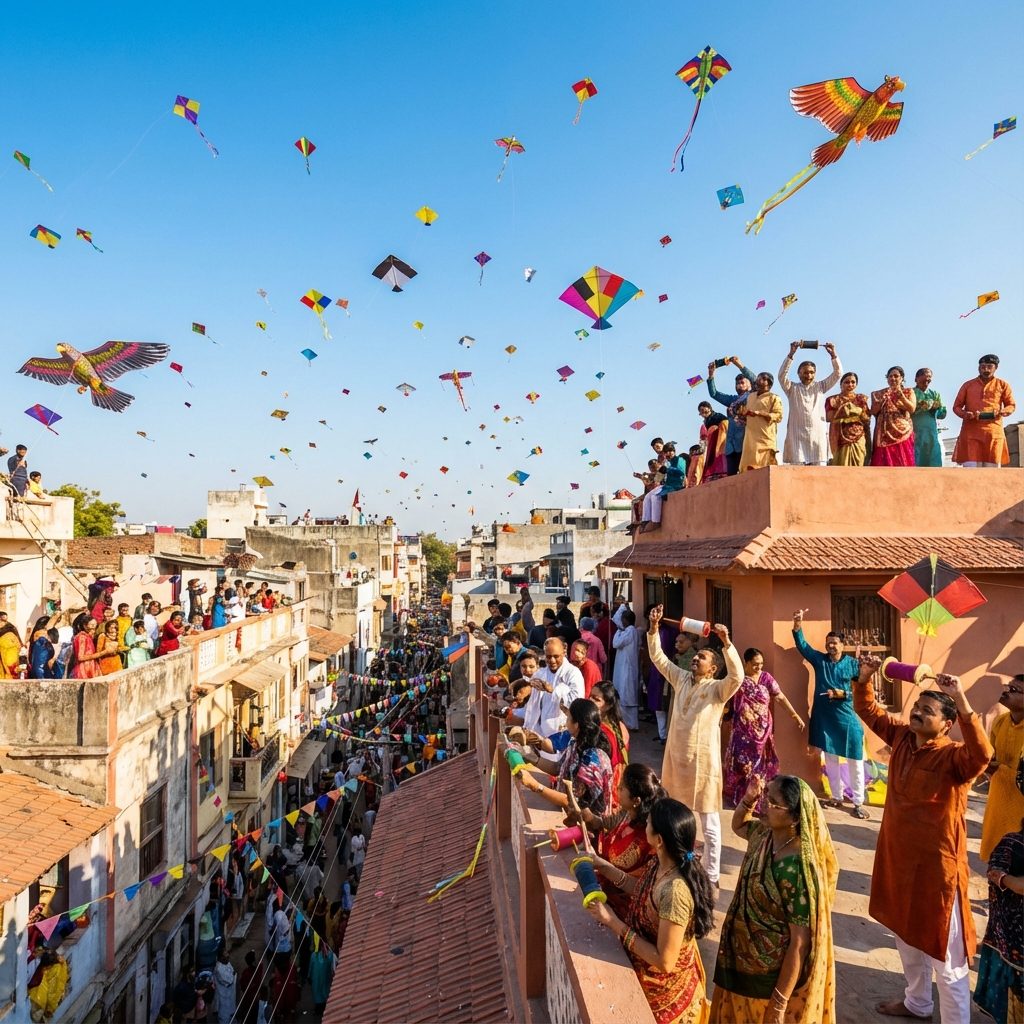
Kite flying is a popular tradition on Makar Sankranti. Many places in Odisha organize kite flying competitions.
Significance of Kite Flying
- Joy and Enthusiasm — Families come together to fly kites
- Sun Exposure — Morning sunlight is beneficial for health
- Social Gathering — Meeting neighbors and friends
Cultural Significance
Makar Sankranti is deeply connected with Odisha's culture:
Family Reunions
- Married Women's Visit — Daughters return to their parents' home
- Pitha Distribution — Pithas are shared with relatives
- Blessings — Seeking blessings from elders
Folk Songs and Dance
Various folk songs are sung during Makar Sankranti, and the songs differ from region to region.
Nabanna Celebration
Farming families express gratitude for the new harvest.
How the Day Usually Unfolds
Families differ, but a typical day runs from a sesame oil massage and early bath, to offering arghya to the rising Sun, puja and donations, then makara chaula, pithas and a festive meal, with kite flying and cultural programs later in the day.
Modern Celebrations
Today, Makar Sankranti is celebrated through:
- Social Media — #MakarSankranti trends every year
- Online Greetings — Sending digital cards
- NRI Odias — Celebrating in various parts of the world
- Pitha Melas — Pitha exhibitions in cities
Greetings in Odia
These greetings are used on the occasion of Makar Sankranti:
- "Makara Sankranti Shubhechha!" — Happy Makar Sankranti!
- "Makara Melar Shubhakamana!" — Best wishes for Makar Mela!
Summary
Makar Sankranti is a rich cultural festival of Odisha that represents:
- Devotion to the Sun God
- Celebration of new harvest
- Showcase of Pitha culinary traditions
- Occasion for family and community gathering
This festival beautifully blends Odisha's traditions, religion, and culture.
Related: Nuakhai • Raja Parba • Odia Culture