
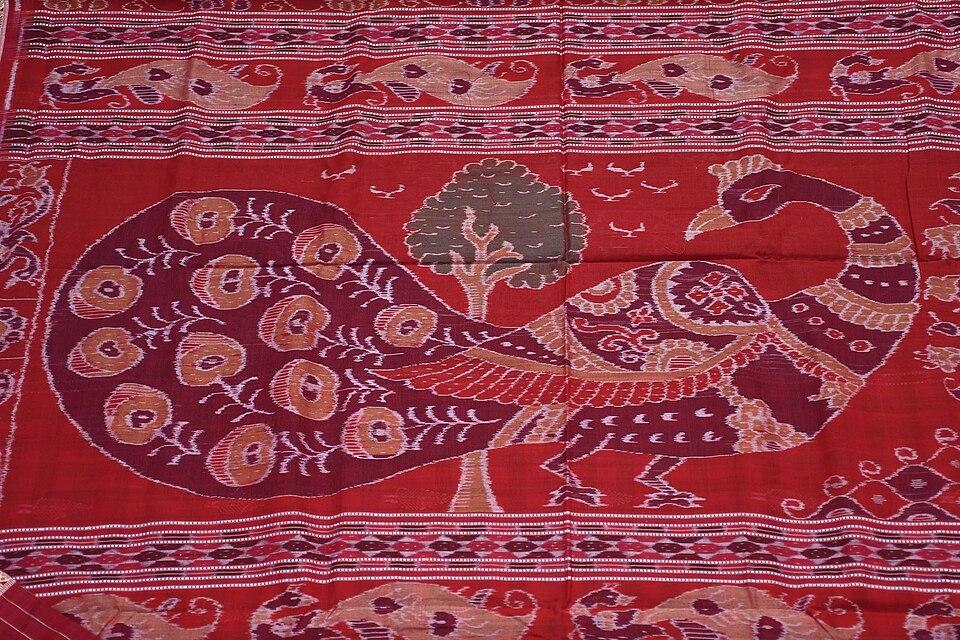
Sambalpuri saree (ସମ୍ବଲପୁରୀ ଶାଢ଼ୀ) is one of the finest handloom textiles in India, originating from the western districts of Odisha. Known for its distinctive ikat (bandha) technique where threads are tie-dyed before weaving, each saree is a masterpiece that can take several weeks to create, depending on the design.
Quick Facts
| Aspect | Details |
|---|---|
| Origin | Sambalpur, Bargarh, Balangir, Sonepur, Boudh districts |
| GI Tag | Registered as "Sambalpuri Bandha Saree & Fabrics" |
| Technique | Ikat (Bandha) — tie-dye before weaving |
| Material | Silk and cotton |
The Bandha Technique
The magic of Sambalpuri textiles lies in bandha (ବନ୍ଧ), meaning "to tie":
- Design planning — Pattern mapped on graph paper
- Tying — Threads bundled and tied at precise points with wax-coated thread
- Dyeing — Tied sections resist dye, creating patterns
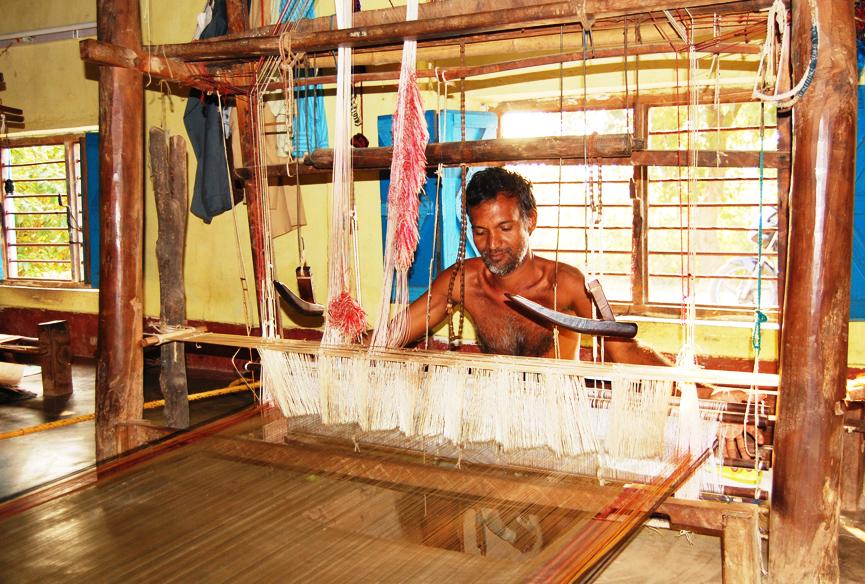
- Weaving — Dyed threads carefully aligned on the loom
- Final product — Patterns appear organically woven into the fabric
"In bandha weaving, the design is born in the thread, not on the loom — making every saree a pre-planned miracle."
Signature Motifs
Sambalpuri sarees feature motifs inspired by nature and temple architecture:
| Motif | Odia Name | Meaning |
|---|---|---|
| Shankha | ଶଙ୍ଖ | Conch shell — auspiciousness |
| Chakra | ଚକ୍ର | Wheel — Lord Jagannath |
| Phula | ଫୁଲ | Flower — beauty of nature |
| Hathi | ହାତୀ | Elephant — majesty |
| Mayura | ମୟୂର | Peacock — grace |
| Matsya | ମତ୍ସ୍ୟ | Fish — fertility |
Types of Sambalpuri Textiles
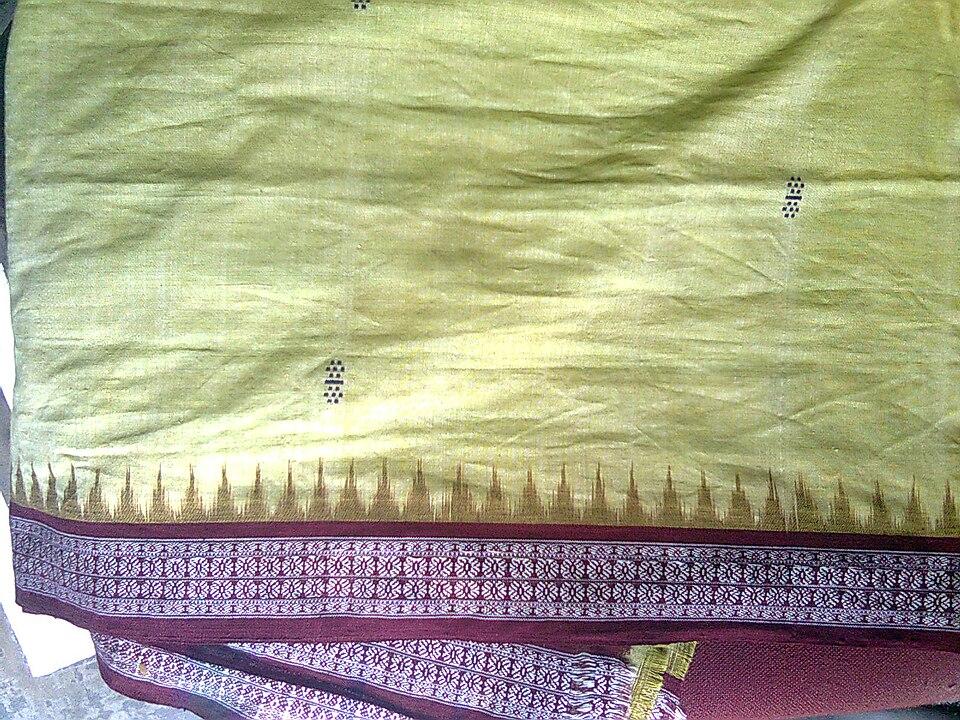
Sambalpuri Silk Saree
The flagship product — rich silk with intricate bandha work, worn at weddings and festivals.
Bomkai Saree
Named after Bomkai village in Ganjam district, and now woven largely in Subarnapur (Sonepur) district. Bomkai has its own GI registration, separate from Sambalpuri Bandha:
- Extra weft technique for embroidered borders
- Rich pallu with temple-inspired patterns
Habaspuri Saree
From Habaspur village in Kalahandi, with its own GI registration:
- Distinctive motifs such as temple and fish designs
- Simple yet elegant motifs
- Mainly cotton
Pasapali
- Chess-board pattern (pasa = dice)
- Vibrant alternating color squares
- Popular everyday wear
Bapta Saree
- Silk warp and cotton weft blend
- Lighter and more affordable
- Perfect for daily wear
The Weaving Centers
| Location | District | Specialty |
|---|---|---|
| Bargarh | Bargarh | Largest production hub |
| Sonepur | Subarnapur | Sonepuri silk |
| Boudh | Boudh | Traditional cotton |
| Sambalpur | Sambalpur | Silk and cotton blend |
| Attabira | Bargarh | Mass production |
Bargarh — The Textile Town
Bargarh is the heart of Sambalpuri weaving:
- A large weaving population depends on handloom
- Barpali is known for its own style of Sambalpuri saree
- The annual Dhanu Yatra also celebrates local culture
Cultural Significance
Sambalpuri textiles are deeply tied to Odia identity:
- Weddings — Brides traditionally wear Sambalpuri silk
- Festivals — Essential for Raja Parba, Nuakhai, and Rath Yatra
- Gifts — The most cherished gift from western Odisha
- Identity — Wearing Sambalpuri signals pride in Odia heritage
The Weaver Community
The Meher (ମେହେର) community are the traditional custodians:
- Weaving is a family art — passed through generations
- Both men and women participate
- A single saree involves many days of labor
- Low earnings for weavers are a widely reported concern
Boyanika, the Odisha State Handloom Weavers' Cooperative Society, sells weavers' work and helps with market access.
Awards & Recognition
- GI Tag — Legal protection for authenticity
- National Handloom Award — Multiple weavers honored
- Padma Shri — Master weavers such as Chaturbhuj Meher and Kunja Bihari Meher awarded
How to Identify Authentic Sambalpuri
| Feature | Authentic | Fake |
|---|---|---|
| Weave | Handloom texture | Machine-made smoothness |
| Motif edges | Slightly soft (ikat characteristic) | Perfectly sharp |
| Label | GI or Boyanika tag | No certification |
| Price | Reflects weeks of handwork | Suspiciously cheap |
Where to Buy
| Store | Location |
|---|---|
| Boyanika | Bhubaneswar, multiple outlets |
| Utkalika | Bhubaneswar |
| Sambalpuri Bastralaya | Bargarh |
| Government Handloom House | Major Odisha cities |
| Online | Boyanika and other official cooperative portals |
Always look for the GI tag, a handloom mark or a trusted cooperative seller to ensure authenticity.
Challenges Facing Weavers
- Competition from power looms and cheap imitations
- Low wages despite high skill requirements
- Young generation moving to other occupations
- Counterfeit products damaging the brand
Supporting the Craft
You can help by:
- Buying authentic Sambalpuri products
- Choosing handloom over power loom
- Spreading awareness about GI-tagged textiles
- Supporting fair-trade cooperatives
Related: Odissi Dance • Odia Culture • Nuakhai
.jpg%2F960px-Samlei_Gudi_(Samaleswari_Temple).jpg&w=3840&q=75)