.jpg%2F960px-Samlei_Gudi_(Samaleswari_Temple).jpg&w=3840&q=75)
Sambalpur (ସମ୍ବଲପୁର) is the cultural capital of western Odisha, a city with a fierce history of resistance, a legendary textile tradition, and the Hirakud Dam, one of the longest earthen dams in the world. Named after the presiding goddess Samaleswari (ସମଲେଶ୍ୱରୀ), Sambalpur has been a center of power and culture for over 500 years.
Quick Facts
| Aspect | Details |
|---|---|
| Named After | Goddess Samaleswari |
| River | Mahanadi |
| Ruling Dynasty | Chauhan dynasty (c. 1570–1849) |
| Famous Freedom Fighter | Veer Surendra Sai |
| Major Landmark | Hirakud Dam |
| Cultural Identity | Sambalpuri textiles, Nuakhai festival |
Ancient History
Early Period
- Buddhist and Jain influences in early centuries
- Parts of the region were ruled by early medieval dynasties such as the Somavamsis (9th–12th century)
Pre-Chauhan Period
- Controlled by various tribal chieftains
- The Binjhal and Gond communities were dominant
- Goddess Samaleswari worship established as the central cult
The Chauhan Dynasty (c. 1570–1849)
The Chauhan dynasty first ruled the neighbouring Patna kingdom from the 14th century; around 1570, Balaram Dev founded the separate Sambalpur State, which his successors ruled for nearly 300 years:
| Ruler | Period | Notable Events |
|---|---|---|
| Balaram Dev | c. 1570 | Founded Sambalpur State |
| Baliar Dev | 1650–1688 | Expanded the kingdom |
| Chhatra Sai | 1690–1725 | |
| Ajit Singh | 1725–1766 | |
| Maharaj Sai | 1820–1827 | His death led to a succession dispute |
| Rani Mohan Kumari | 1827–1833 | Installed by the British |
| Narayan Singh | 1833–1849 | Last ruler; state annexed under the doctrine of lapse |
Origin Legend
The Chauhans of Sambalpur claimed descent from the great Prithviraj Chauhan of Delhi. While historically debated, this connection shaped their warrior identity.
Achievements
- Built the Samaleswari Temple as the state temple
- Promoted textile weaving as royal craft
- Established trade routes through western Odisha
- Kept considerable autonomy, though the Marathas occupied Sambalpur in the early 19th century until 1817, after which it came under British protection
Veer Surendra Sai — Freedom Fighter
Veer Surendra Sai (ବୀର ସୁରେନ୍ଦ୍ର ସାଇ, 1809–1884) is Sambalpur's greatest hero — a Chauhan prince and freedom fighter who resisted the British for decades:
Timeline
| Year | Event |
|---|---|
| 1809 | Born on 23 January in Khinda village, north of Sambalpur |
| 1827 | Took up arms at about 18, after the British installed Rani Mohan Kumari |
| 1840 | Captured and imprisoned in Hazaribagh jail |
| 1857 | Freed from Hazaribagh jail by rebels during the 1857 uprising |
| 1857–1862 | Led guerrilla warfare in Sambalpur forests |
| 1862 | Surrendered under a British policy of conciliation |
| 1864 | Re-arrested; later held at Asirgarh Fort, Madhya Pradesh |
| 1884 | Died in captivity at Asirgarh on 28 February |
In all, Surendra Sai spent about 37 years in British prisons.
His Legacy
- One of Odisha's earliest anti-colonial leaders — his resistance began decades before 1857
- Inspired tribal communities to resist colonial rule
- His adopted guerrilla tactics were ahead of his time
- Honored with a statue at Sambalpur's main square
- Veer Surendra Sai Airport in Jharsuguda named after him
Hirakud Dam — Engineering Marvel
The Hirakud Dam (ହୀରାକୁଦ ବନ୍ଧ) is Sambalpur's most iconic modern landmark:
| Aspect | Details |
|---|---|
| Built | 1948–1953 (inaugurated 1957) |
| Length | 4.8 km main dam; about 25.8 km including dykes (often described as the longest earthen dam in the world) |
| River | Mahanadi |
| Reservoir | 743 sq km (Hirakud Reservoir) |
| Purpose | Flood control, irrigation, power generation |
| Power | 347.5 MW hydroelectric capacity |
Impact
- Controls devastating Mahanadi floods that ravaged coastal Odisha
- Provides irrigation to about 1,556 sq km in the kharif season and about 1,084 sq km in the rabi season
- Created a massive reservoir (an "inland sea")
- Two viewing towers: Gandhi Minar and Jawahar Minar
- Debrigarh Wildlife Sanctuary lies beside the reservoir
Goddess Samaleswari
The presiding deity of Sambalpur is Maa Samaleswari:
- Temple located on the banks of Mahanadi at Sambalpur town center
- Goddess is believed to be a form of Shakti (Durga)
- Devotees from across western Odisha worship here
Sambalpuri Culture
Nuakhai Festival
The most important festival of western Odisha:
- Celebrated to welcome the new rice harvest
- Families eat new rice together (Nua = new, Khai = eat)
- Falls one day after Ganesh Chaturthi
- A festival of agriculture, family bonding, and gratitude
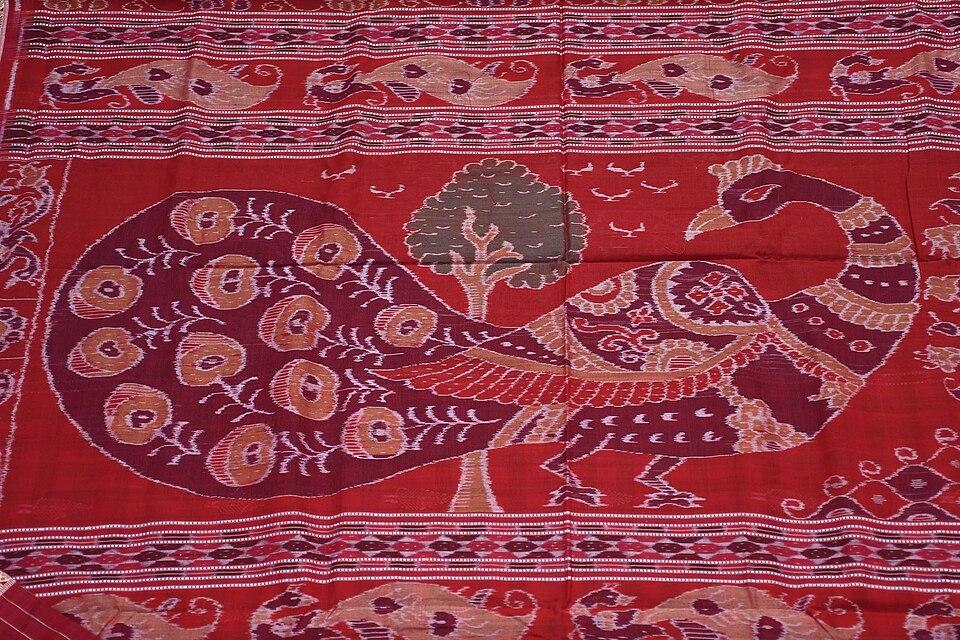
Sambalpuri Textiles
Sambalpur is one of India's best-known centres of ikat (bandha) weaving:
- Sambalpuri sarees are GI-tagged
- In the bandha technique, yarns are tied and dyed before weaving, so the design appears on both sides of the fabric
- Major weaving centers: Bargarh, Sonepur, Boudh
Sambalpuri Music
- Dalkhai — Folk dance song of harvest season
- Rasarkeli — Romantic folk song
- Mailajada — Wedding songs
- Sambalpuri pop music is hugely popular in Odisha
Modern Sambalpur
| Aspect | Details |
|---|---|
| Population | 183,383 (city) / 269,575 (urban agglomeration), 2011 Census |
| University | Sambalpur University (1967) |
| Industry | Textiles, mining, power |
| Airport | Veer Surendra Sai Airport (Jharsuguda) |
| Railway | Sambalpur Junction, headquarters of the Sambalpur division of East Coast Railway |
Famous People from Sambalpur
- Veer Surendra Sai — Freedom fighter
- Gangadhar Meher — Renowned Odia poet, called Swabhaba Kabi, born at Barpali (now in Bargarh district, formerly part of undivided Sambalpur district)
- Bhima Bhoi — Saint poet of Mahima cult
Places to Visit
| Attraction | Highlights |
|---|---|
| Samaleswari Temple | 16th-century deity, riverbank temple |
| Hirakud Dam | Viewpoints, sunset, boating |
| Huma Temple | Famous leaning temple |
| Ghanteswari Temple | Riverside temple near Chiplima, once a navigation landmark |
| Deer Park | Wildlife near Hirakud |
| Ushakothi (Badrama) Wildlife Sanctuary | Forest wildlife, including elephants |
Related: Odisha History • Chilika Lake • Konark Sun Temple