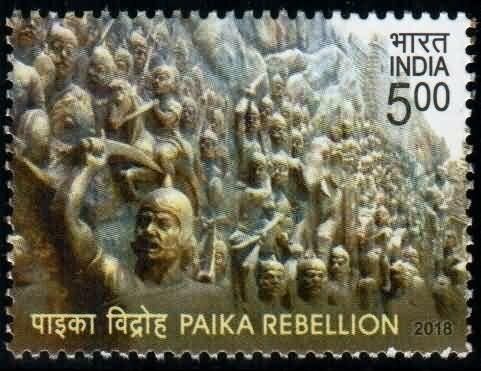
The Paika Rebellion, or Paika Bidroha, was a major, armed rebellion against the British East India Company's rule in Odisha in 1817. Led by Buxi Jagabandhu Bidyadhar, this uprising occurred forty years before the famous revolt of 1857, leading many in Odisha to argue that it should be regarded as India's First War of Independence — a claim the Government of India has not formally accepted.
Quick Facts
| Aspect | Details |
|---|---|
| Year | 1817 |
| Location | Khurda, Odisha (and surrounding regions) |
| Leader | Buxi Jagabandhu Bidyadhar Mohapatra Bhramarbar Ray |
| Participants | Paikas (traditional militia), Zamindars, and general populace |
| Opponent | British East India Company |
| Cause | Loss of rent-free lands, oppressive land revenue policies, salt monopoly, abolition of cowrie currency |
Who Were the Paikas?
The Paikas (derived from the word Padatika, meaning foot soldier) were the traditional, landed militia of Odisha. They served as warriors for the Gajapati kings of Khurda during times of war and acted as law enforcement during peacetime.
In return for their military service, the Paikas were granted rent-free land tenures scattered throughout the kingdom. Their martial skills, fierce loyalty, and deep connection to the land made them a formidable force.
The Catalysts for Rebellion
When the British East India Company conquered Odisha in 1803, the fortunes of the Paikas drastically changed. The rebellion in 1817 was the explosion of simmering discontent caused by a series of oppressive British policies:
1. Land Dispossession
The British abruptly abolished the rent-free land tenures that the Paikas had enjoyed for generations. Suddenly, the warriors were rendered landless and economically destitute. Furthermore, revenue officials, many of them from outside Odisha, were accused of colluding to acquire the estates of local Odia Zamindars (landlords) who failed to pay newly imposed, exorbitant taxes.
2. The Salt Monopoly
Before 1803, salt in Odisha was cheap and freely available, particularly for the coastal population. The British established a strict monopoly over salt manufacturing and drastically increased its price, causing immense hardship to the common people.
3. Depreciation of Local Currency
The British banned the use of Cowrie shells (the traditional local currency) and demanded taxes be paid in silver rupees. This abrupt economic shift ruined local farmers and traders.
The Exploits of Buxi Jagabandhu
The rebellion found its natural leader in Buxi Jagabandhu Bidyadhar Bhramarbar Ray, the hereditary military commander (Buxi) of the Khurda kingdom. He himself had been wrongfully stripped of his vast estate of Rorung through the trickery of British officials.
The Spark
In March 1817, a party of about 400 Kandhas (a tribal group from Ghumusar) crossed into Khurda and declared open rebellion against Company rule. The Paikas under Buxi Jagabandhu joined them.
Key Events
- Under Buxi Jagabandhu's leadership, the Paikas attacked Company police stations and offices; at Banapur they looted and burned the police station and post office.
- The rebellion spread to Pipili, Puri, and parts of Cuttack district. By April the rebels had captured Puri, forcing Company forces to fall back towards Cuttack until British troops retook the town.
- The movement garnered widespread support among the common people, tribals, and dispossessed Zamindars, transforming it into a mass uprising.
The Suppression and Aftermath
Despite their immense courage, the Paikas, armed mainly with traditional weapons (swords, bows, and matchlocks), ultimately could not withstand the superior military might and artillery of the British East India Company.
- By the middle of 1817, the Company had re-established its authority over most of the region, and operations against escaped rebels continued for several years. Many rebels were executed, imprisoned or transported.
- Buxi Jagabandhu engaged in guerrilla warfare in the deeply forested hills for several years. He evaded capture until 1825, when he finally surrendered under a negotiated settlement. He lived under British supervision in Cuttack until his death in 1829.
Legacy
The Paika Bidroha remains one of the most celebrated chapters in the history of Odisha. Its bicentenary in 2017 was widely commemorated, and the Odisha government proposed that it be recognised as India's first war of independence. In 2021, however, the Union Culture Minister told Parliament that it could not be termed the First War of Independence; NCERT's Class VIII history textbook includes it as among the first popular uprisings against British rule.
Related: Kalinga War • Odisha History • Madhusudan Das