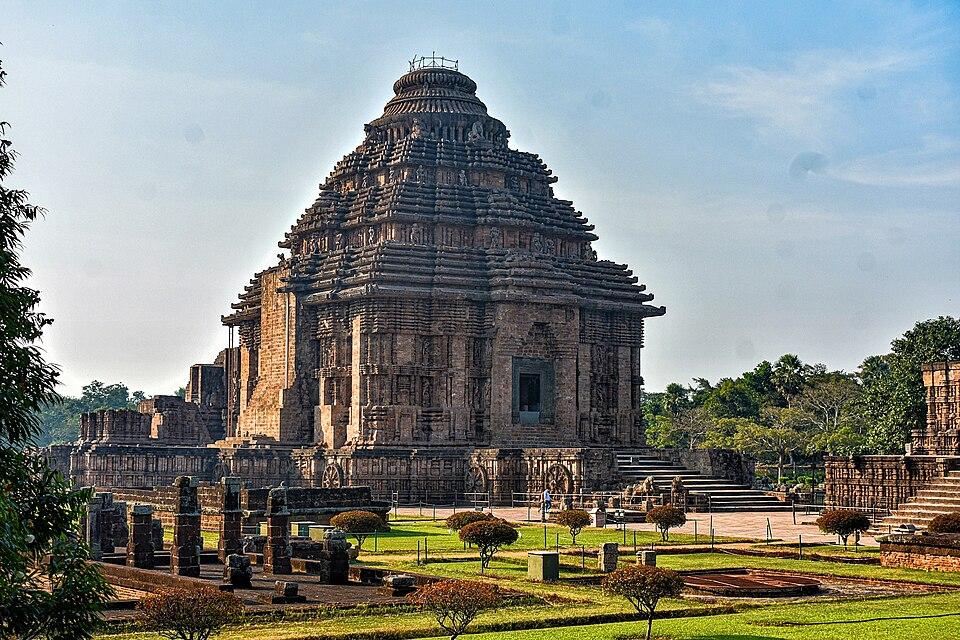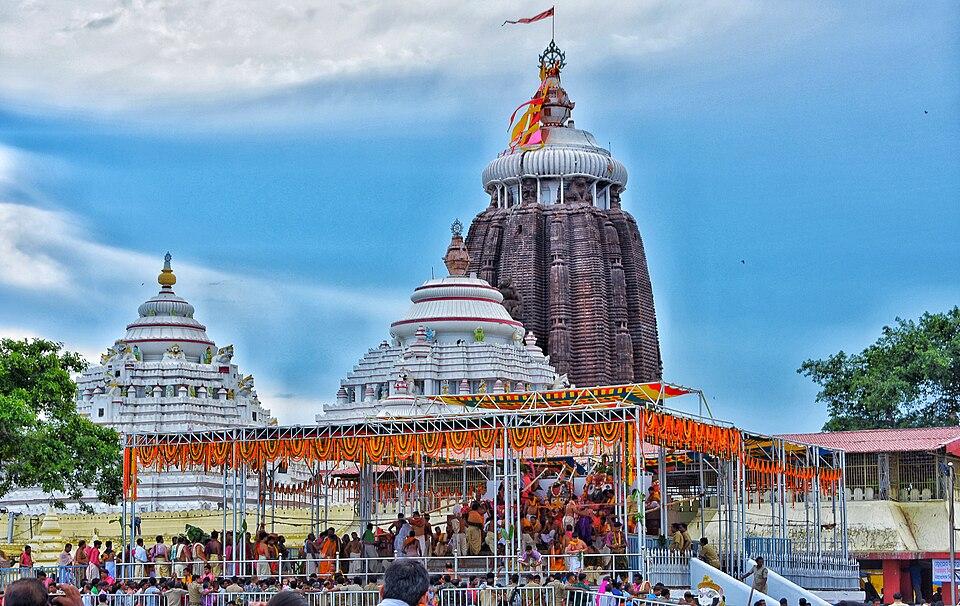
The Jagannath Temple (ଜଗନ୍ନାଥ ମନ୍ଦିର) in Puri is one of the most sacred Hindu temples in India. As one of the four Char Dhams (sacred pilgrimage sites), it attracts millions of devotees annually.
The Divine Trinity
The temple houses three deities made of sacred Neem wood:
| Deity | Description | Color |
|---|---|---|
| Lord Jagannath | Lord of the Universe | Black |
| Lord Balabhadra | Elder brother | White |
| Goddess Subhadra | Sister | Yellow |
Their unique, abstract forms with large round eyes and stump-like arms are interpreted by some as representing the limits of human understanding of the divine.
Temple History
Construction Timeline
- 12th century CE — Current temple built
- King Anantavarman Chodaganga — Initiated construction
- His successors — Completed the temple; sources differ on whether the final work should be credited to Anangabhima Deva II or Anangabhima Deva III, who dedicated the kingdom to Jagannath
Ancient Origins
The worship of Jagannath predates the temple by centuries, with roots in tribal traditions merged with Hindu practices.
Architecture
The temple complex covers more than 37,000 square metres (roughly 9 to 10 acres) and contains well over a hundred smaller temples and shrines. The main temple includes:
The Four Structures
- Vimana (Sanctum) — about 214 feet (65 m) tall, houses the deities
- Jagamohana (Assembly Hall) — For darshan
- Natamandapa (Dance Hall) — For ritual performances
- Bhogamandapa (Offering Hall) — For food offerings
The Nilachakra
The Nila Chakra (blue wheel) atop the temple:
- Made of Ashtadhatu (8 metals)
- About 3.5 m (11 ft) high, with a circumference of about 11 m (36 ft)
- A new flag is hoisted on it every day
- A popular belief holds that it appears to face the viewer from every direction
The Nila Chakra should not be confused with the Sudarshana, the fourth deity worshipped in the sanctum alongside the trinity.
The Temple Kitchen
The temple kitchen is often described as one of the largest in the world, and on festival days it can feed very large numbers of devotees:
- Hundreds of cooks and assistants work in it
- 56 varieties of Mahaprasad (the Chhappan Bhog)
- All dishes are vegetarian, without onion or garlic
- Cooked in earthen pots over wood fire
- According to temple tradition, pots are stacked one above another and the top pot cooks first
Sacred Rituals
Daily Routine
Timings vary by day and season; the main rituals include:
- Dwarapitha and Mangala Arati — Opening of the doors in the early morning
- Mailama — Changing of clothes and cleaning
- Abakasha — Morning purificatory rites
- Sahana Mela — Public darshan
- Pahuda — Deities retire for the night, usually late at night
Special Ceremonies
- Snana Yatra — Annual bathing
- Rath Yatra — Chariot festival
- Nabakalebara — Renewal of the wooden deities, held in years with an extra month of Ashadha (typically after 8, 12 or 19 years)
Unique Traditions
Equality Before Jagannath
- No caste discrimination in Mahaprasad
- Everyone eats together
- The Gajapati King of Puri sweeps the chariot floors during Rath Yatra (Chhera Pahanra)
The Flag
By custom, a new flag is hoisted on the Nila Chakra every day by temple servitors who climb the tower. The Patitapabana ("saviour of the fallen") form of Jagannath is also associated with the temple, historically giving darshan to those not allowed inside.
The Mystery of the Flag
A popular belief says the flag flies opposite to the wind direction; this is a widely repeated legend rather than a documented phenomenon.
Restrictions
- Only Hindus allowed inside
- Photography prohibited inside
- Dress code enforced
Visiting Information
- Location — Puri, Odisha
- Open — Generally from early morning until late night (around 5 AM to 10:30 PM); hours change on festival days, so check with the Shree Jagannath Temple Administration
- Entry — Free (for Hindus)
- Best time — October to March
Related: Rath Yatra • Mahaprasad - Famous Foods