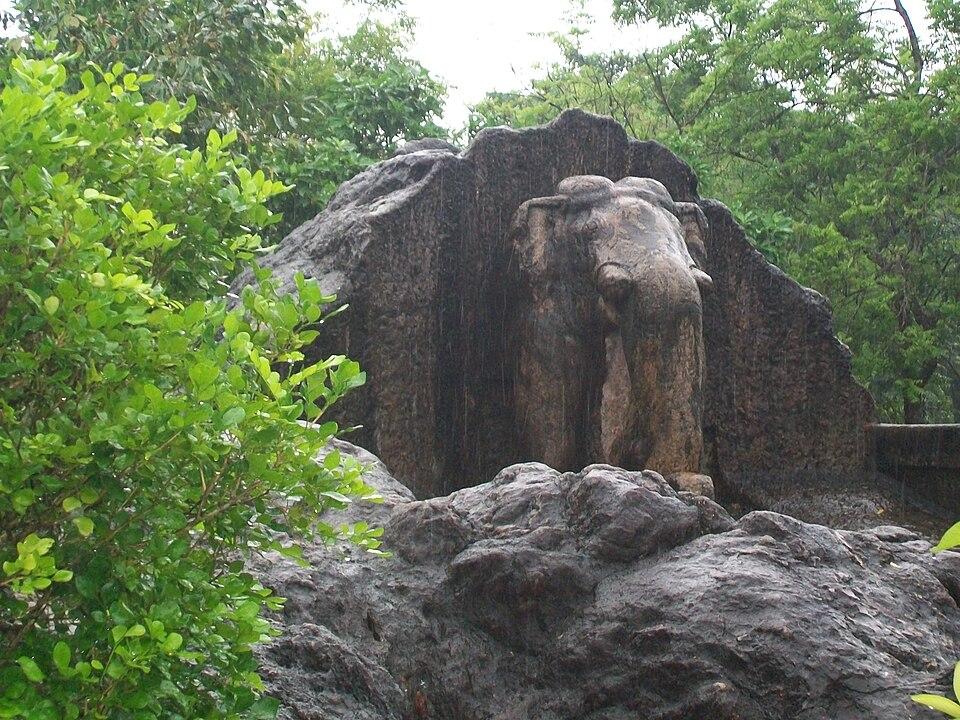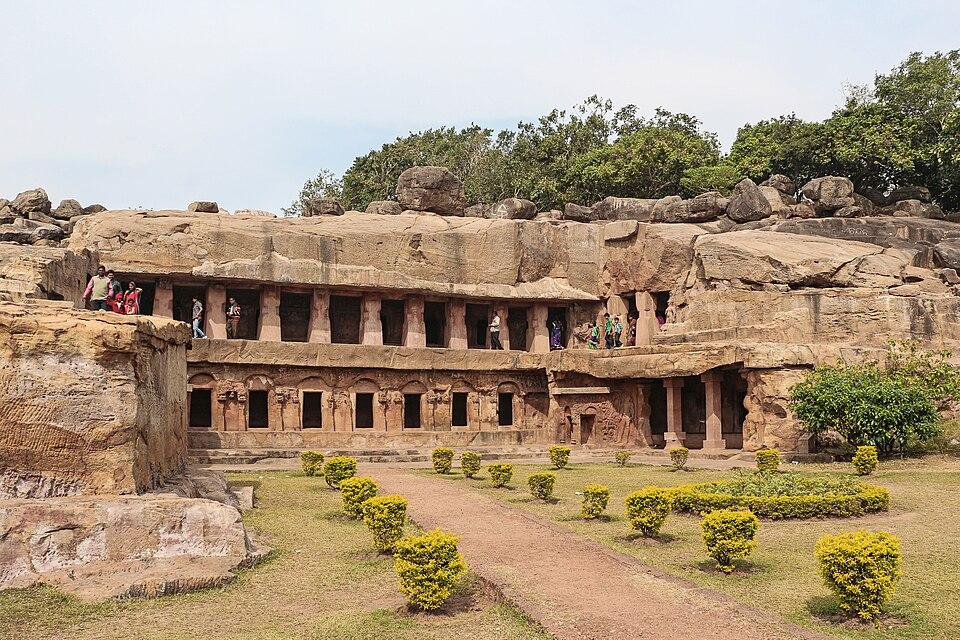
The Udayagiri and Khandagiri caves (ଉଦୟଗିରି ଓ ଖଣ୍ଡଗିରି ଗୁମ୍ଫା) are a complex of 33 rock-cut caves (18 in Udayagiri and 15 in Khandagiri) located on twin hills near Bhubaneswar. Cut mainly in the 2nd–1st century BCE, many of them associated with the reign of King Kharavela, they represent one of India's earliest examples of Jain rock-cut architecture.
Quick Facts
| Aspect | Details |
|---|---|
| Location | Western edge of Bhubaneswar city |
| Age | Over 2,000 years (2nd–1st century BCE) |
| Built By | Many associated with King Kharavela of Kalinga |
| Religion | Jainism |
| Total Caves | 33 (18 Udayagiri + 15 Khandagiri) |
| ASI Status | Protected monument |
King Kharavela — The Builder
Kharavela (ଖାରବେଳ) was one of the greatest rulers of ancient Kalinga (Odisha):
| Aspect | Details |
|---|---|
| Dynasty | Mahameghavahana (Chedi) dynasty of Kalinga |
| Period | 2nd or 1st century BCE (dating is debated) |
| Capital | Kalinganagari (near modern Bhubaneswar) |
| Religion | Jainism |
| Legacy | Military conquests, patronage of arts, Jain caves |
The Hathigumpha inscription presents him as a warrior, patron of music and dance, and devout Jain. Historians note that some of its claims of conquest may be exaggerated.
The Famous Hathigumpha Inscription
The Hathigumpha inscription (Elephant Cave inscription) is the most important historical document found here:
- Written in Brahmi script in the Prakrit language
- 17 lines carved on the entrance brow of Hathigumpha cave
- Describes his youth (15 years of play, 9 years as crown prince, coronation in his 24th year) and then his year-by-year achievements as king
- Claims a victory over the king of Magadha
- Records the extension of a canal first dug under a Nanda king, and other public works
- Describes his patronage of Jain monks
Key Revelations
- The Kalinga kingdom was a major military power
- Kharavela recovered a Jain idol taken by the Nanda dynasty
- He organized massive cultural festivals
- He built caves as retreats for Jain monks
Important Caves
Udayagiri Caves
| Cave | Name | Highlights |
|---|---|---|
| Cave 1 | Rani Gumpha (Queen's Cave) | Double-storied, most ornate, dancer sculptures |
| Cave 3 | Chhota Hathi Gumpha | Small elephant guardian |
| Cave 4 | Alakapuri Gumpha | Beautifully carved |
| Cave 9 | Manchapuri Gumpha | Upper and lower stories |
| Cave 10 | Ganesh Gumpha | Elephant statues at the entrance, carved friezes |
| Cave 12 | Bagh Gumpha (Tiger Cave) | Tiger-mouth entrance — most photographed |
| Cave 14 | Hathi Gumpha (Elephant Cave) | Famous inscription of Kharavela |
Khandagiri Caves
| Cave | Name | Highlights |
|---|---|---|
| Cave 1-2 | Tatowa Gumpha | Parrot carvings |
| Cave 3 | Ananta Gumpha | Carved figures, women, elephants |
| Cave 7 | Navamuni Gumpha | Jain Tirthankara figures (added c. 11th century) |
| Cave 8 | Barabhuji Gumpha | Carvings of Tirthankara figures |
| Cave 10 | Ambika Gumpha | Jain reliefs |
Architectural Features
Cave Types
- Residential cells — Simple, single-room caves for monks
- Ceremonial halls — Larger caves with pillars
- Double-storied — Like Rani Gumpha, with staircases
Carvings & Sculptures
The caves feature remarkable carvings depicting:
- Royal court scenes — King with attendants
- Dance performances — Women in graceful poses
- Religious symbols — Jain Tirthankaras, stupas
- Animals — Elephants, lions, tigers, monkeys
- Nature — Trees, vines, lotus motifs
- Daily life — Soldiers, musicians, common people
Bagh Gumpha (Tiger Cave)
The most iconic cave — its entrance is carved as the mouth of a tiger:
- The jaws form the doorway
- Carved in the natural rock contour
- A masterpiece of ancient Indian rock art
- One of the most photographed monuments in Odisha
Rani Gumpha (Queen's Cave)
The largest and most elaborate cave:
- Double-storied structure with three wings on each level
- The central wing has seven entrances on the ground floor and nine openings on the upper floor
- Exquisite carvings of dancers, musicians, and royal scenes
- Possibly used for royal ceremonies
Jain Heritage
The caves served as residential retreats for Jain monks:
- Used during the rainy season (chaturmas)
- Simple cells for meditation and ascetic life
- Evidence of prolonged Jain habitation
- Later additions on Khandagiri (c. 11th century) include carved Tirthankara figures and Jain shrines
Visiting Information
Timings
- Open: Sunrise to Sunset
- Best Time: October to March (pleasant weather)
- Duration: 2-3 hours for both hills
How to Reach
- From Bhubaneswar railway station: a short drive by auto/taxi
- From airport: a short drive by auto/taxi
- By bus: Multiple city buses available
- Nearby: Lingaraj Temple and Dhauli are both within Bhubaneswar's surroundings
Entry Fee
The caves are a ticketed monument of the Archaeological Survey of India, with separate rates for Indian and foreign visitors and free entry for children under 15. Fees change, so check the ASI website before visiting.
Tips
- Wear comfortable shoes — lots of stone stairs
- Carry water, especially in the warmer months
- The sunset view from Khandagiri is spectacular
- Hire a guide to understand the carvings better
Nearby Attractions
- Lingaraj Temple — 11th century Shiva temple
- Dhauli Shanti Stupa — Peace pagoda built in 1972 near Ashoka's rock edicts
- Nandankanan Zoo — Famous for white tigers
- Odisha State Museum — Historical artifacts
Related: Konark Sun Temple • Kalinga War • Odisha History